Key Takeaways
- Shade canopies lower surface temperatures, cut cooling loads, and block UV—turning exposed asphalt and courtyards into comfortable, usable square footage.
- Well-designed steel canopies act as architectural features that lift curb appeal, brand visibility, and property value, not just functional add-ons.
- Painted and galvanized steel delivers decades of low-maintenance performance and engineered wind and snow load resistance.
- In-house design, engineering, and fabrication keep large commercial canopy projects on schedule—some installed in as little as three days.
- The right partner handles structural, aesthetic, and code demands for commercial, multifamily, municipal, and industrial properties nationwide.
Shade canopies have quietly become one of the most decision-driving elements in modern property design. What was once treated as an optional add-on is now a deliberate architectural and operational choice—shaping how a site feels, how much it costs to cool, how long its surfaces last, and how usable its outdoor square footage really is. For developers, property managers, general contractors, and facility owners, a well-engineered steel shade canopy does double duty: it solves real comfort and durability problems while raising the visual and commercial value of the property. This guide breaks down exactly how shade canopies influence modern design and what to weigh before specifying one.
Why are shade canopies central to modern property design?
Contemporary commercial design pushes activity outdoors—courtyards, amenity decks, drive-throughs, transit plazas, and covered parking are now expected, not optional. But open exposure to sun and weather makes those spaces hot, glare-filled, and underused for much of the year. Shade canopies resolve that tension. They define outdoor rooms, manage solar gain, and give architects a structural element that reads as intentional rather than improvised. The result is a property that performs better thermally and signals quality the moment someone arrives.
- They convert exposed, unusable areas into comfortable, programmable space.
- They reduce solar heat load on buildings, vehicles, and pavement.
- They create visual identity and rhythm across a site or campus.
- They protect people, equipment, and assets from UV and weather.
How do shade canopies cool outdoor spaces and cut energy costs?
Direct sunlight is the single biggest driver of outdoor discomfort and surface heat. By intercepting solar radiation before it reaches pavement, glass, and people, a canopy can dramatically lower surface and ambient temperatures beneath it. Shaded asphalt and concrete stay cooler, which reduces the urban heat-island effect across parking lots and plazas. Canopies positioned over building entrances, west-facing glazing, or rooftop equipment also reduce the cooling load inside, easing demand on HVAC systems during peak summer months.
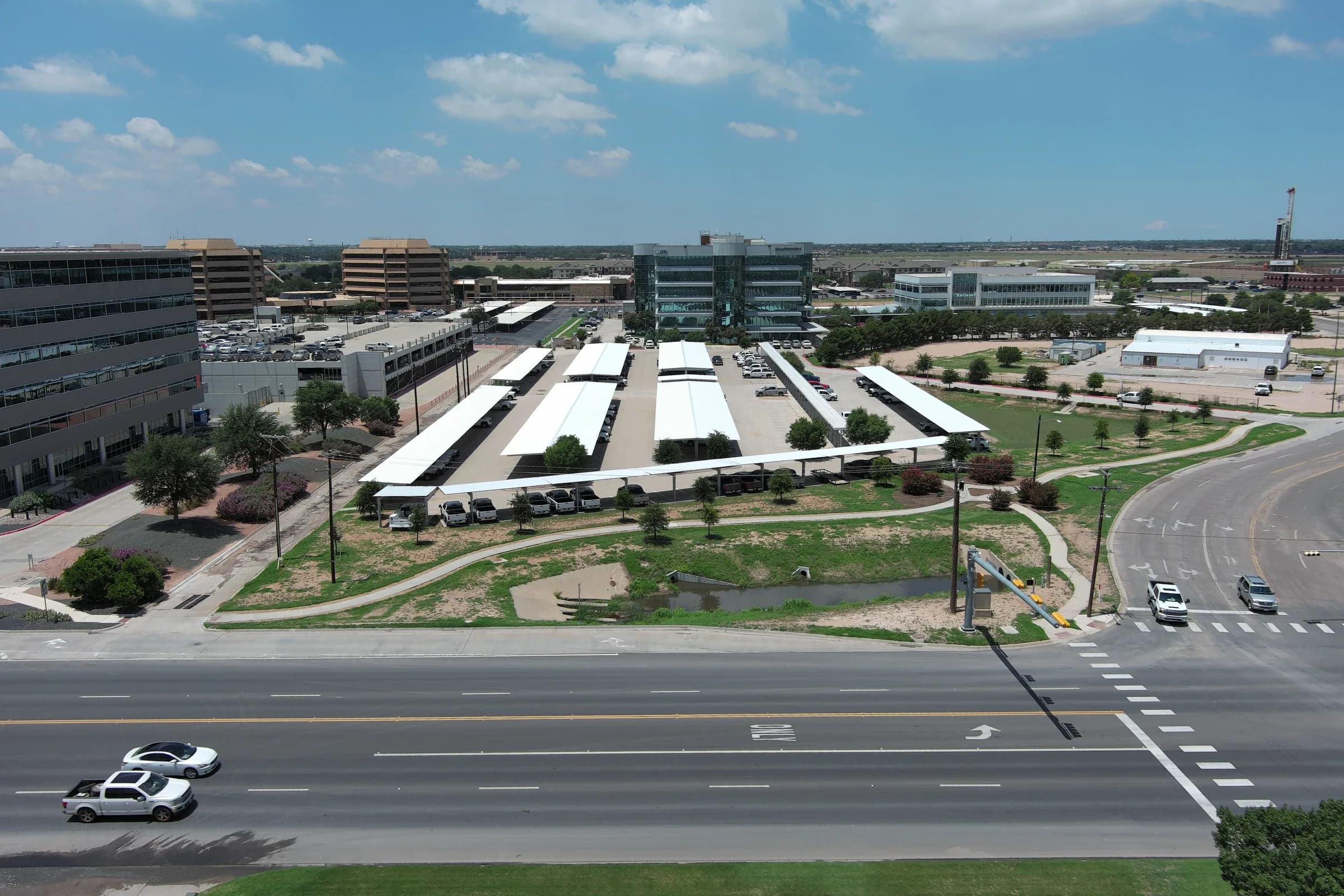
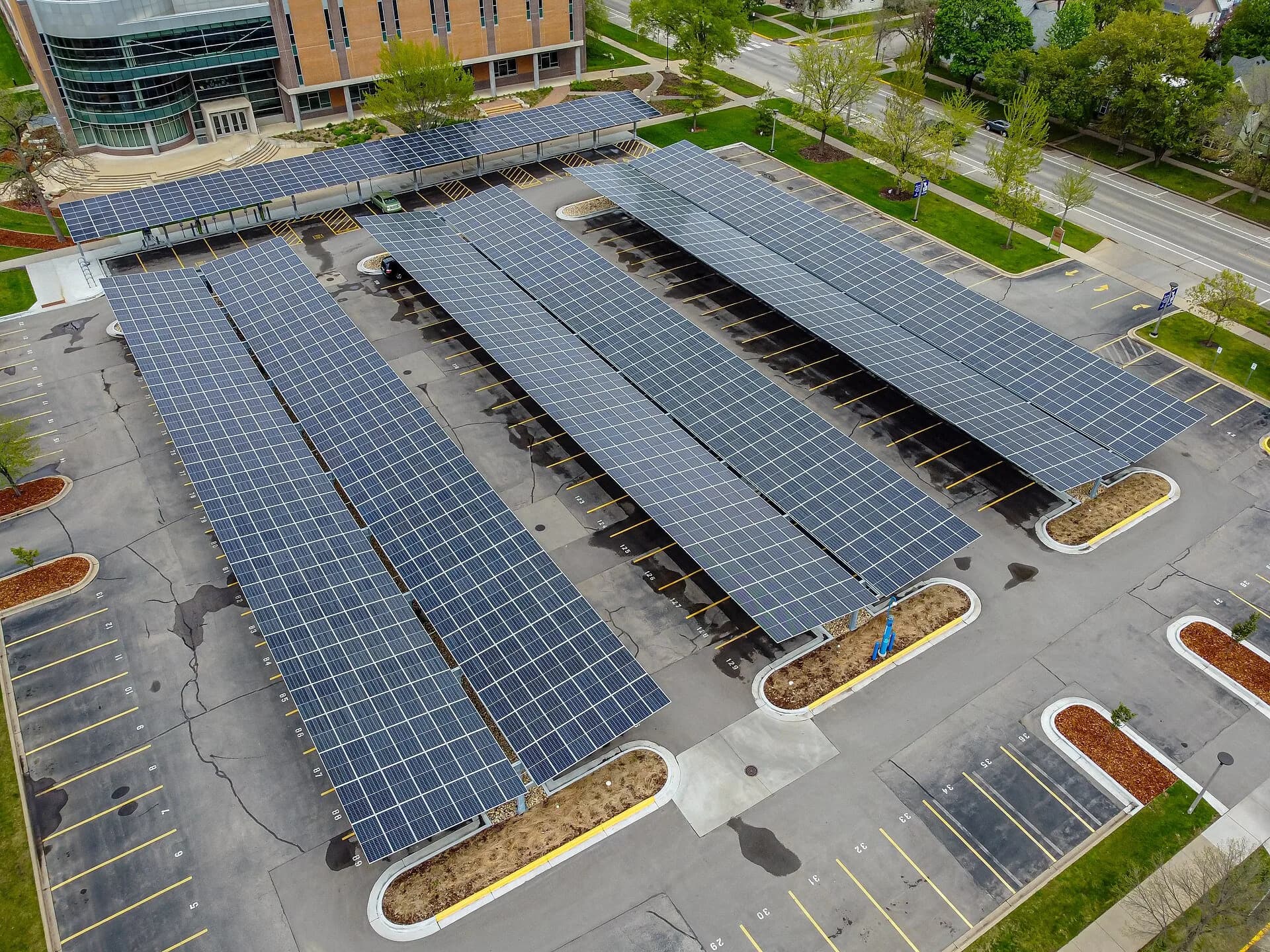
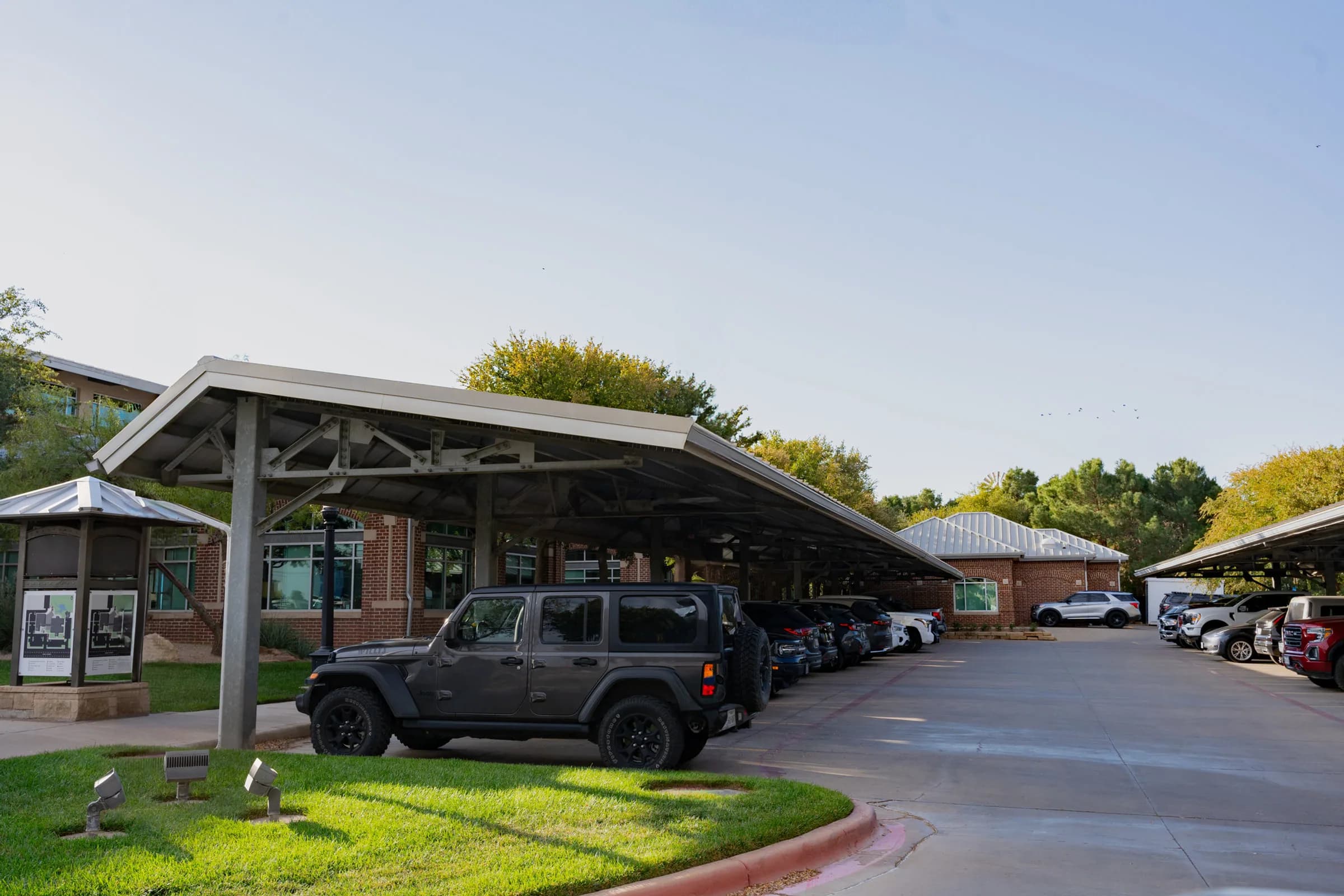
For fleet yards, multifamily parking, and retail lots, covered parking canopies keep vehicles measurably cooler—protecting interiors, reducing fuel evaporation, and improving the tenant or customer experience. Pairing a canopy with rooftop photovoltaics turns that same shade into a solar canopy that generates power while it cools, a combination increasingly specified on commercial and municipal projects nationwide.
How do canopies expand usable square footage?
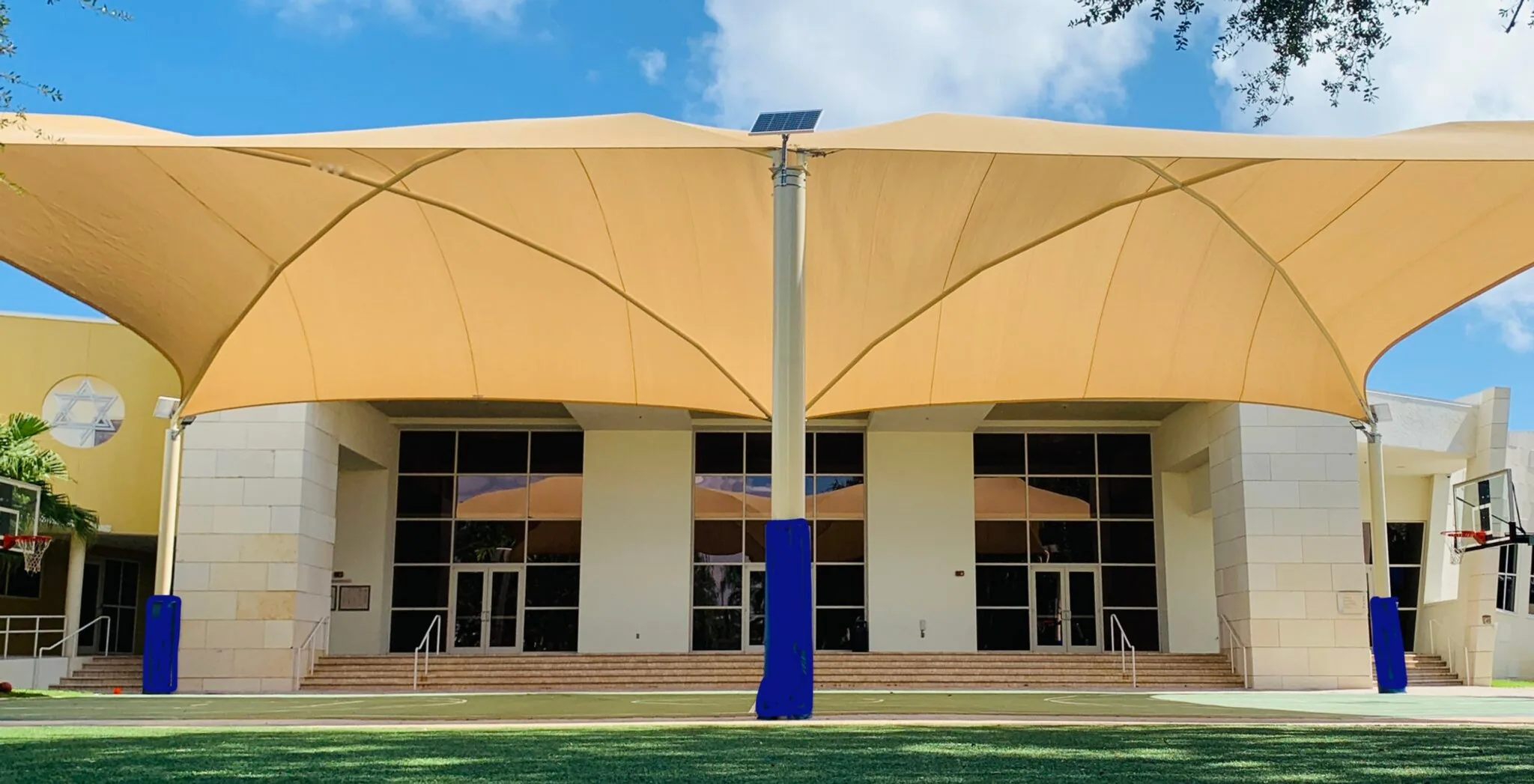
Outdoor area that's too hot, too bright, or too exposed simply doesn't get used—and unused space is wasted investment. A shade canopy reclaims it. A bare courtyard becomes a year-round amenity deck; an open walkway becomes a protected pedestrian connector; a sun-baked patio becomes a dining or gathering zone that drives foot traffic and dwell time. For income-producing properties, that recovered usability translates directly into leasing appeal, event capacity, and revenue per square foot.
- Multifamily amenity decks, breezeways, and resident gathering areas
- Retail and restaurant storefronts, patios, and queuing zones
- School and university courtyards, walkways, and play areas
- Industrial loading, staging, and equipment-protection zones
- Municipal transit stops, parks, and public plazas
Do shade canopies actually protect against UV and improve comfort?
Yes—and it's one of their most underrated functions. Quality shade structures block a large share of harmful UV radiation, reducing sunburn risk and long-term exposure for the people using a space. That matters most where vulnerable populations gather: schools, daycare playgrounds, parks, recreation facilities, and senior-living communities. Beyond health, shade reduces glare, lowers perceived temperature, and makes seating, signage, and screens usable in bright conditions. For property owners, UV protection is increasingly a duty-of-care and liability consideration, not just a comfort upgrade.
What architectural and property-value benefits do canopies add?
A canopy is one of the few functional elements that can also become a building's signature. Steel allows long, clean spans and custom geometry—cantilevers, tapered columns, sweeping rooflines—that integrate with or intentionally contrast a building's facade. Finishes can be color-matched to brand standards or campus palettes using durable painted finishes. Done well, the canopy reinforces wayfinding, frames entrances, and gives a property a polished, deliberate presence that supports higher rents, stronger leasing, and better first impressions for tenants, customers, and investors.
Why steel for shade structures?
Steel earns its place as the default material for serious commercial canopies because it balances strength, span, and longevity better than fabric or aluminum-only alternatives. It carries engineered wind and snow loads, resists impact and fire, and supports the large clear spans that covered parking and plazas demand. Painted and galvanized finishes shrug off corrosion and UV fade, so the structure keeps its engineered integrity and its appearance for decades with minimal upkeep—an important total-cost-of-ownership advantage over materials that sag, tear, or require frequent refinishing.
What should commercial buyers look for in a canopy partner?
The design impact of a canopy is only as good as the team that engineers and builds it. The strongest outcomes come from a single accountable partner who controls the full process—design, engineering, fabrication, and installation—rather than coordinating across disconnected vendors. That integration is what keeps complex commercial projects on schedule and on spec.
- In-house design, engineering, and fabrication for control over quality, lead time, and cost
- Site-specific structural engineering for local wind, snow, and seismic loads
- OSHA-trained leadership and safe, organized installation crews
- Painted or galvanized finishes matched to brand and architectural intent
- Proven capacity for regional and national contracts, not just local jobs
Real Steel Canopies brings all of that under one roof. With 20+ years of experience and OSHA 30 certified leadership, the company designs, engineers, fabricates, and installs commercial steel canopies, covered parking, solar canopies, shade structures, steel carports, and aluminum walkways. Headquartered in Lubbock, Texas, the team takes on regional and national contracts and has completed large-scale installs in as little as three days—including fast-track work for general contractors like Austin Commercial. For developers, property managers, GCs, and facility owners, that combination of speed, engineering rigor, and finish quality is what turns a shade canopy from a line item into a lasting design and operational asset.
Frequently Asked Questions
- How much can a shade canopy reduce cooling costs?
- Savings vary by climate, orientation, and coverage, but canopies cut solar heat gain on the surfaces they cover—pavement, glazing, vehicles, and rooftop equipment. Shading west-facing glass or building entrances eases HVAC demand during peak summer, while covered parking keeps vehicles cooler. Pairing a canopy with rooftop solar adds on-site power generation alongside the shade benefit.
- How do shade canopies expand usable outdoor square footage?
- By tempering sun, glare, and rain, canopies make previously unusable outdoor areas viable for daily activity—patios, courtyards, amenity decks, and gathering spaces become comfortable year-round. That effectively adds leasable or programmable square footage without new enclosed construction, letting designers extend a building's functional footprint into the site itself at a fraction of the cost.
- How much UV protection do shade canopies provide?
- A solid steel canopy roof blocks essentially all direct UV beneath it, shielding people, vehicles, finishes, and merchandise from fading and sun damage. Unlike fabric, which degrades and lets light through as it ages, a painted steel canopy maintains full coverage for decades, making it ideal for protecting both occupants and the surfaces below long term.
- What types of properties benefit most from shade canopies?
- Any property with underused or exposed outdoor space benefits—multifamily amenity decks and parking, retail and restaurant patios, school and university courtyards, industrial staging areas, and municipal plazas and transit stops. Commercial, industrial, multifamily, and municipal owners, developers, and general contractors all use canopies to improve comfort, usability, and value.
- Can shade canopies be customized to match a building's design?
- Yes. Steel supports custom geometry—cantilevers, tapered columns, and long sweeping spans—that can integrate with or intentionally contrast a facade. Painted finishes can be color-matched to brand standards or campus palettes, so the canopy reinforces wayfinding and architectural identity while delivering its functional shade and protection benefits.
Ready to protect your property?
Let's design a custom steel canopy solution tailored to your site, budget, and timeline.