Key Takeaways
- Solar canopies do double duty: they shade vehicles and pedestrians while generating clean on-site electricity from otherwise idle parking lots.
- Pairing canopies with EV chargers creates a self-supplying charging hub that draws tenants, customers, and fleet operators.
- Energy offsets, federal tax credits, and ESG positioning combine to shorten payback and strengthen asset value.
- Structural steel construction with painted or galvanized finishes delivers decades of weather, wind, and corrosion resistance.
- In-house design, engineering, fabrication, and installation keep solar canopy projects on schedule across regional and national sites.
A parking lot is one of the largest, most underused assets on any commercial property. It sits in full sun all day, generates no revenue, and bakes vehicles and pavement while the building behind it pulls expensive power off the grid. Solar canopies flip that equation. By mounting solar arrays on engineered steel structures over parking, walkways, and outdoor common areas, you create shade and clean electricity from the same footprint, with no additional land. For developers, property managers, general contractors, and fleet operators, that dual return is why solar canopies are quickly becoming standard infrastructure rather than a sustainability experiment.
What is a solar canopy and how does it work?
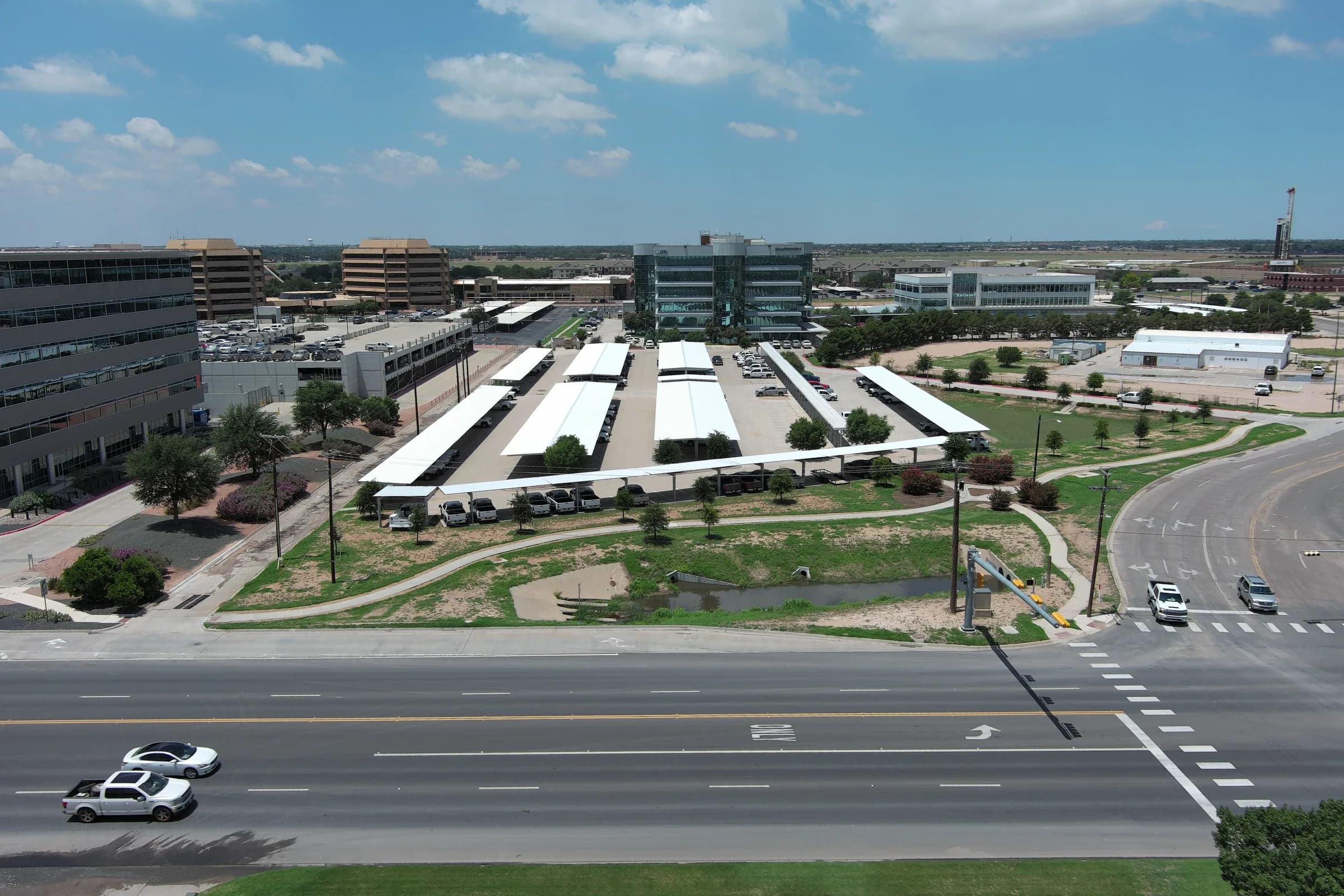
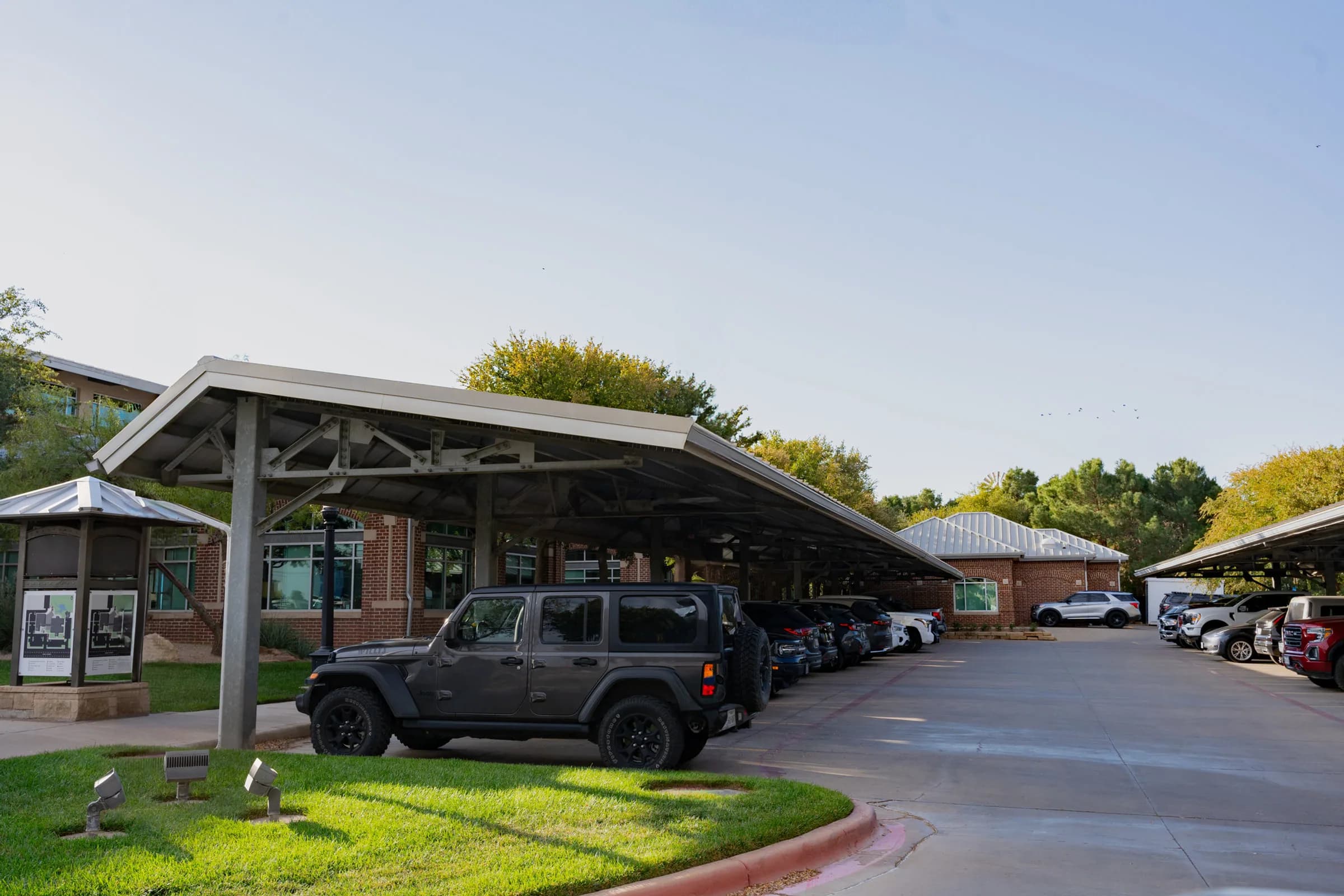
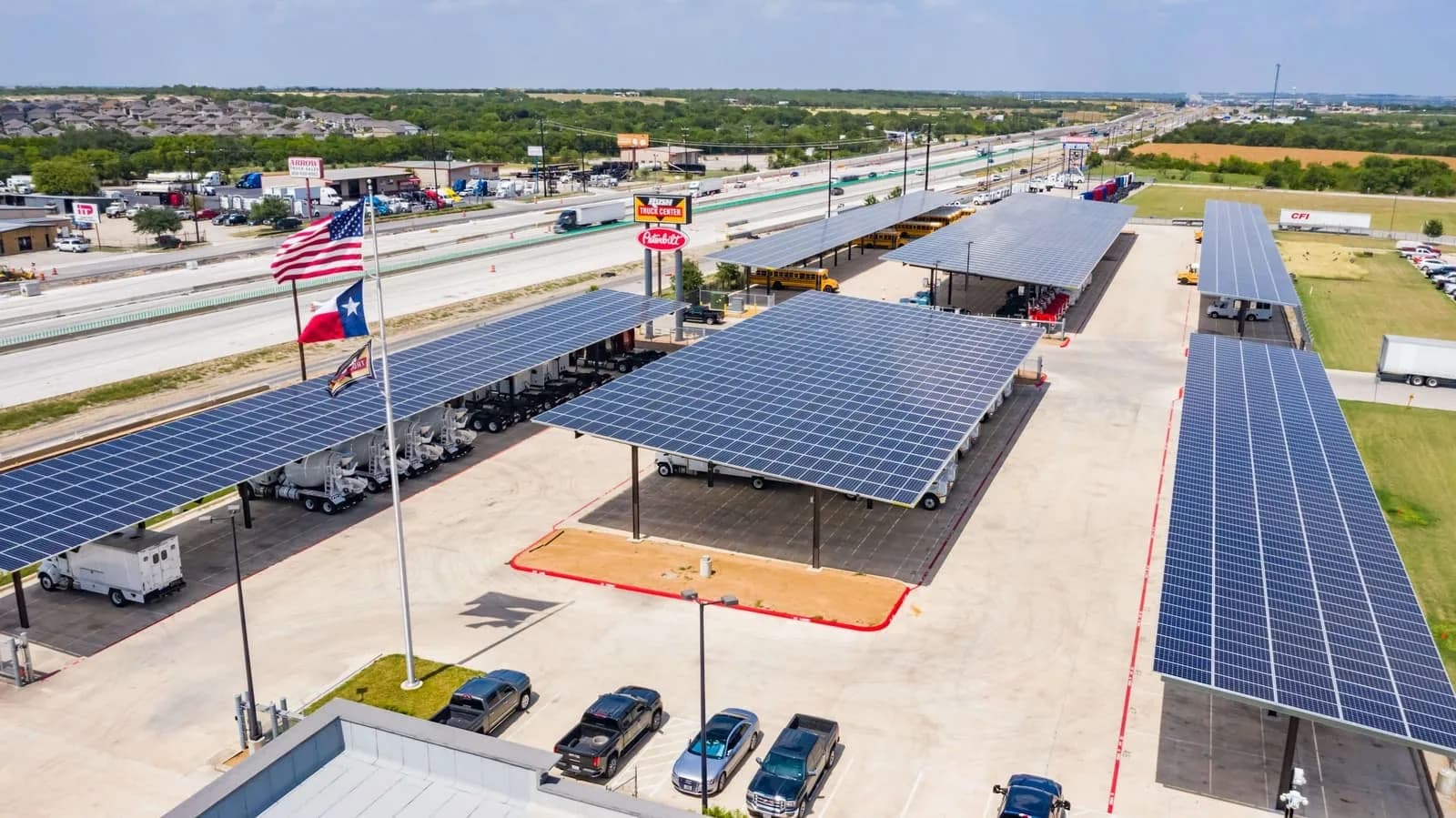
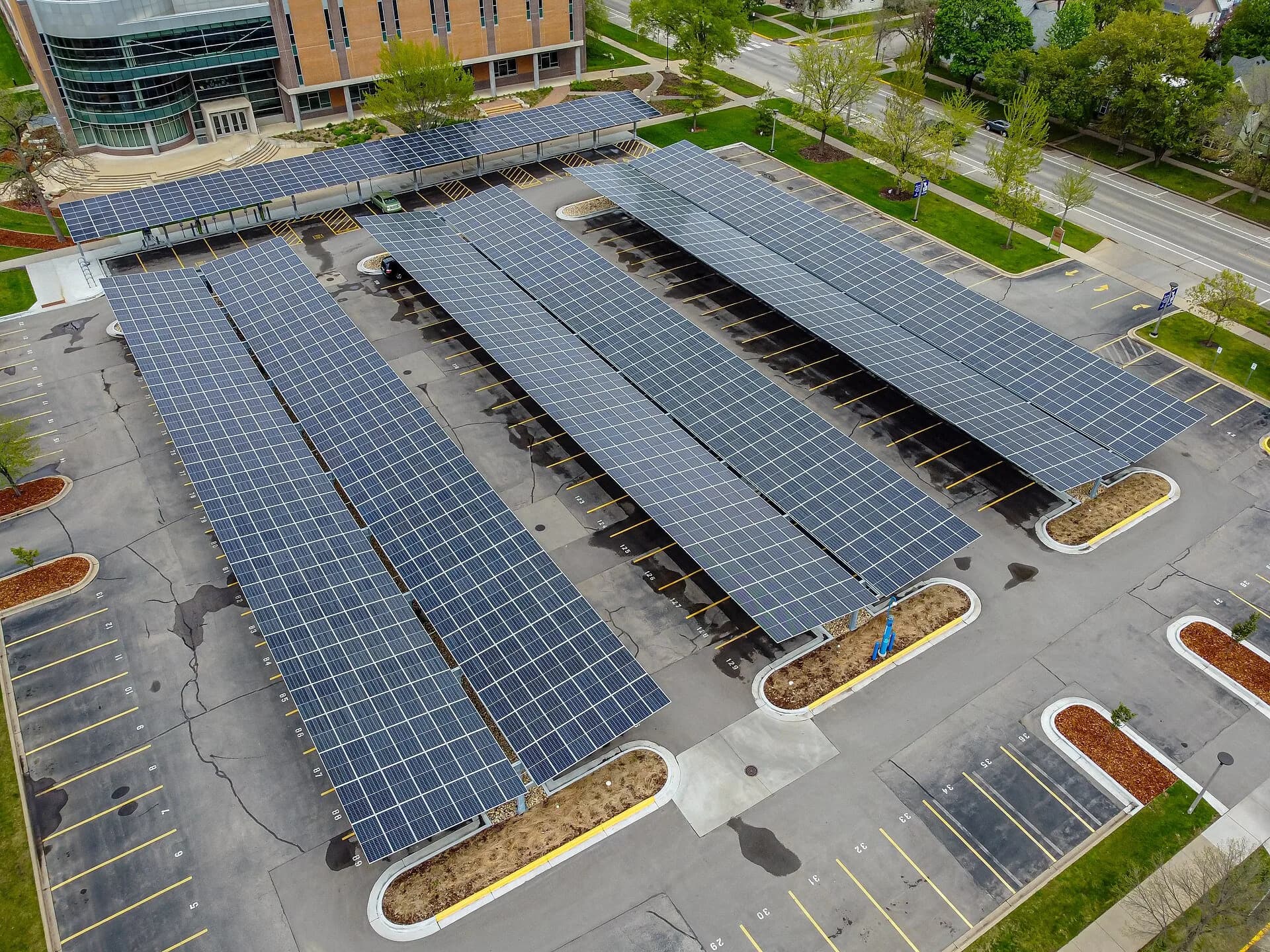
A solar canopy is a freestanding steel shade structure with photovoltaic (PV) panels integrated into the roof. Instead of bolting panels flat onto an existing rooftop, the canopy is the mounting system, elevated on columns high enough for vehicles or foot traffic to pass underneath. The panels capture sunlight and feed an inverter that converts it to usable AC power for the building, EV chargers, or the utility grid. Because the structure is purpose-built for solar, panels can be pitched and oriented for optimal production rather than constrained by an existing roofline.
The result is a single asset that performs three jobs at once:
- Protects vehicles and pedestrians from sun, hail, rain, and snow
- Generates measurable clean electricity every daylight hour
- Hosts EV charging, lighting, and other site infrastructure overhead
Why are solar canopies a smart use of commercial parking?
Large, sun-exposed lots at corporate campuses, retail centers, distribution hubs, hospitals, and multifamily communities are prime candidates. The land is already paved, owned, and cleared, so there is no acquisition cost and no competition with rooftop equipment, drainage, or future expansion. A canopy converts that dead space into a generating asset while simultaneously improving the tenant and customer experience underneath it. Covered parking is a documented amenity that influences where people lease, shop, and park, so the shade alone often justifies the structure before a single kilowatt is counted.
How do solar canopies lower energy costs and improve ROI?
Every kilowatt-hour a canopy produces is a kilowatt-hour you do not buy from the utility, which directly reduces operating expense and insulates the property from rate increases. On top of energy offset, commercial solar projects can qualify for the federal Investment Tax Credit, accelerated depreciation, and a range of state and utility incentives that materially shorten payback. Because lower operating costs and on-site generation raise net operating income, a well-designed canopy can also lift the appraised value of the underlying asset. The economics improve further when the structure feeds EV chargers, replacing grid-purchased fuel with self-generated power.
Where the financial returns come from
- Reduced grid consumption and demand charges
- Federal tax credits and accelerated depreciation
- State, utility, and sustainability incentive programs
- Revenue or fee opportunities from EV charging
- Higher net operating income and asset value
How do solar canopies support EV charging infrastructure?
EV adoption across consumer, commercial, and municipal fleets keeps climbing, and the charging has to live somewhere. Solar canopies are the natural home for it. Chargers mount directly on the same columns that support the array, conduit runs through the structure, and drivers charge in shade rather than open sun. For fleet operators and logistics sites, pairing on-site generation with charging reduces dependence on the grid and helps manage demand. For retail and multifamily owners, shaded EV charging is a visible amenity that differentiates the property and attracts a growing, higher-value customer base. Designing the canopy and charging plan together avoids the cost and disruption of retrofitting later.
Do solar canopies actually help with ESG and sustainability goals?
Yes, and unlike many sustainability line items, the impact is visible and measurable. A solar canopy produces reportable clean energy, displaces grid emissions, and stands as a physical signal of commitment that tenants, investors, and the public can see from the street. For organizations tracking Environmental, Social, and Governance performance, that combination supports green building certifications such as LEED, contributes to renewable energy and emissions targets, and strengthens disclosures to stakeholders. For municipalities and developers, it demonstrates leadership on resilience and clean infrastructure that aligns with public commitments and grant criteria.
What makes a solar canopy durable enough for decades of service?
A solar canopy is only as good as the structure carrying it, and panels are a 25-plus year investment, so the steel beneath them has to match that lifespan. Real Steel Canopies engineers solar canopy structures from heavy structural steel, designed to site-specific wind, snow, and seismic loads rather than generic templates. Painted and galvanized finishes resist rust and corrosion through years of weather exposure, and the column-and-beam framing is sized to carry both the array and the loads of the region it serves. Modular layouts let the same engineered system scale from a handful of stalls to multi-acre lots.
- Structural steel framing engineered to local wind, snow, and seismic codes
- Painted or galvanized finishes for long-term corrosion resistance
- Column spacing and clearances planned around parking and traffic flow
- Modular bays that scale from single rows to full-lot coverage
Why in-house design, engineering, and fabrication matter
Solar canopies sit at the intersection of structural steel, electrical infrastructure, and tight construction schedules, and that coordination is where many projects stall. Real Steel Canopies designs, engineers, fabricates in-house, and installs, so the structure that gets drawn is the structure that gets built, without the handoffs and finger-pointing of a fragmented supply chain. With 20-plus years of experience, OSHA 30 certified leadership, and a track record of completing large-scale installs in as little as three days for partners like Austin Commercial, the same team carries a project from concept through a fully operational canopy. Headquartered in Lubbock, Texas, the company takes on regional and national contracts for commercial, industrial, multifamily, and municipal clients across the United States.
Solar canopies are not a niche green gesture anymore. They are practical infrastructure that turns idle pavement into shade, clean power, and EV-ready parking while advancing the sustainability and financial goals decision-makers are already accountable for. Built on properly engineered steel and installed by a team that controls the whole process, they are one of the rare upgrades that pays back on the balance sheet, the brand, and the planet at the same time.
Frequently Asked Questions
- How much does a commercial solar canopy cost?
- Cost depends on size, panel count, site conditions, and local structural loads, so pricing is project-specific. The right way to evaluate it is total return: energy offset, federal tax credits, depreciation, incentives, and added asset value, set against the structure and installation. A purpose-built engineered design and in-house fabrication keep budgets predictable and shorten payback.
- Can solar canopies be added to an existing parking lot?
- Yes. Solar canopies are freestanding steel structures designed to be installed over existing paved lots, so you rarely need to acquire or clear land. Engineers assess the surface, drainage, and local wind, snow, and seismic loads, then design columns and footings to suit. The lot stays usable, and the canopy adds shade, power, and optional EV charging overhead.
- Will the solar panels and array survive hail and severe weather?
- Quality photovoltaic modules are tested to withstand hail impact, and the engineered steel canopy beneath them is sized to site-specific wind, snow, and seismic loads. Together they protect the array as a long-term energy asset. Tilting the panels also sheds hail and debris, helping the system keep generating power reliably through decades of exposure.
- How do solar canopies power EV charging and cut utility costs?
- The canopy's panels feed electricity directly into the building or into EV chargers mounted at the stalls below, offsetting grid demand during peak daytime hours when rates are highest. Excess generation can earn net-metering credits. The result is lower utility bills, on-site charging that attracts tenants and visitors, and progress toward measurable clean-energy targets.
- What incentives and ESG benefits do commercial solar canopies offer?
- Solar canopies can qualify for the federal investment tax credit, accelerated depreciation, and many state or utility rebates, improving payback. Beyond economics, they advance ESG and sustainability reporting by generating measurable renewable energy, reducing Scope 2 emissions, and signaling commitment to clean infrastructure to tenants, investors, and municipalities evaluating the property.
Ready to protect your property?
Let's design a custom steel canopy solution tailored to your site, budget, and timeline.