Key Takeaways
- Metal canopies span five core commercial types: industrial, steel, shade, carport, and solar, each engineered for a different operational job.
- Steel offers maximum strength and span; aluminum suits lighter walkways and corrosion-prone sites. Painted and galvanized finishes drive 30+ year service life.
- The right choice depends on load, span, wind and snow codes, and intended use, not just appearance.
- An in-house design-engineer-fabricate-install model compresses timelines, with some large-scale installs completed in as little as three days.
- Real Steel Canopies serves commercial, industrial, multifamily, and municipal clients on regional and national contracts across the U.S.
Metal canopies have quietly become one of the highest-return structures a commercial property can add. They shelter equipment, extend vehicle and asset life, generate clean energy, and turn unused asphalt into comfortable, usable space, all while standing up to decades of sun, wind, and weather. But "metal canopy" is a broad category, and the right structure for a manufacturing yard looks nothing like the right one for a multifamily parking lot or a municipal solar array. This guide breaks down the five core canopy types for commercial and industrial properties, how they differ, and how to spec the one that fits your site.
What is a metal canopy and why does it matter for commercial property?
A metal canopy is a freestanding or building-attached roof structure built primarily from steel or aluminum, engineered to provide overhead protection without fully enclosing a space. For commercial and industrial owners, the appeal is durability and ROI: a properly engineered steel canopy resists corrosion, carries heavy wind and snow loads, and lasts 30 or more years with minimal upkeep. That longevity is why developers, property managers, general contractors, and facility owners increasingly choose metal over fabric or wood for permanent installations.
Real Steel Canopies designs, engineers, fabricates in-house, and installs these structures, with more than 20 years of experience and OSHA 30 certified leadership. Keeping the full process under one roof is what lets the team move quickly; some large-scale installs have been completed in as little as three days, including work for general contractors like Austin Commercial.
What are the main types of metal canopies?
Most commercial projects fall into one of five categories. Each is built from the same family of materials but solves a distinct operational problem:
- Industrial canopies, for protecting machinery, equipment, and inventory at factories and warehouses
- Steel canopies, the structural workhorse for covered parking and high-load applications
- Shade structures, for comfort and usability in public and residential spaces
- Steel carports, for fleet, resident, and public vehicle protection
- Solar canopies, which combine shelter with on-site renewable energy generation
Industrial canopies: protection for operations
Industrial canopies shield valuable machinery, equipment, and inventory from weather-related damage in demanding environments. Their heavy-gauge steel construction withstands sustained wind, driving rain, and snow loads, which makes them a staple at factories, warehouses, distribution yards, and manufacturing facilities. Beyond asset protection, they create sheltered work zones that keep crews productive and safe regardless of conditions.
Steel canopies: strength and span
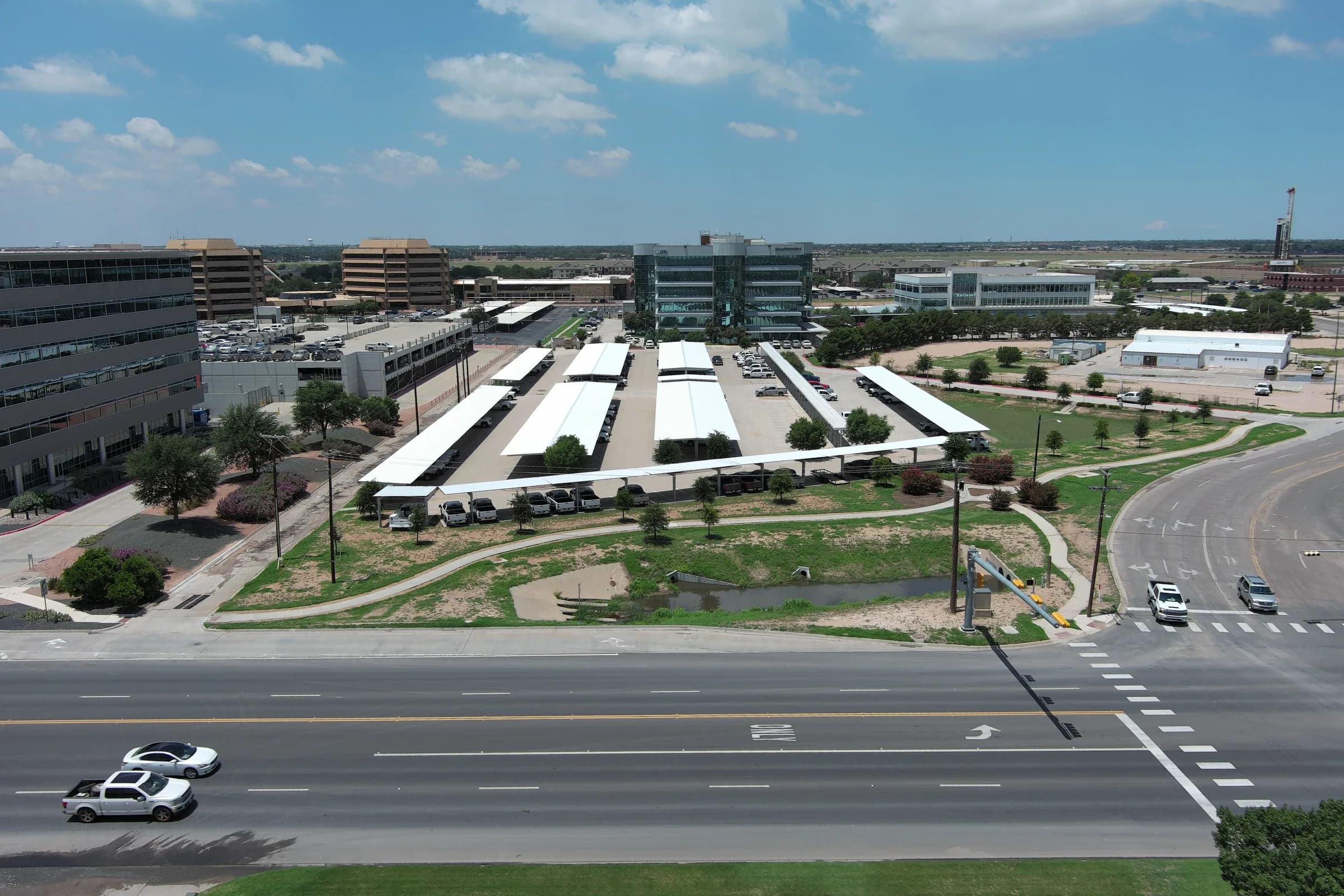
Steel canopies offer the highest structural integrity and the longest clear spans, which is why they dominate covered parking and large-format coverage. Steel parking canopies protect vehicles from hail, UV, and storm damage, extending vehicle life and reducing maintenance and repair costs across a fleet or a tenant base. When a project needs to cover wide areas with minimal columns, steel is almost always the answer.
Shade structures: comfort and usability
Shade structures are increasingly specified for multifamily communities, retail and commercial properties, and municipal spaces. By cutting direct sun exposure over playgrounds, parking lots, walkways, and outdoor seating, they make spaces more comfortable and more usable, which directly supports tenant satisfaction, foot traffic, and property value.
Steel carports: multifunctional vehicle protection
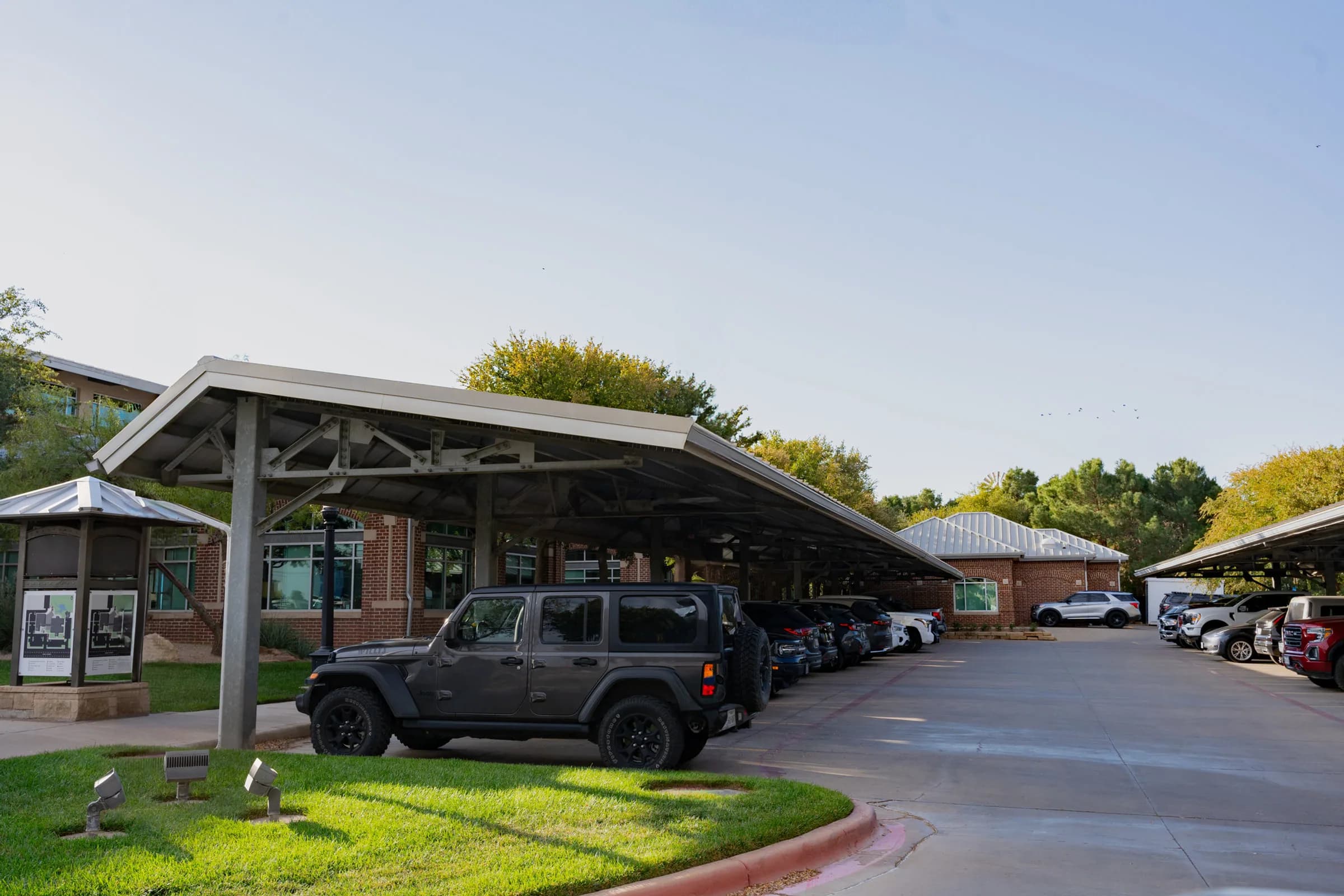
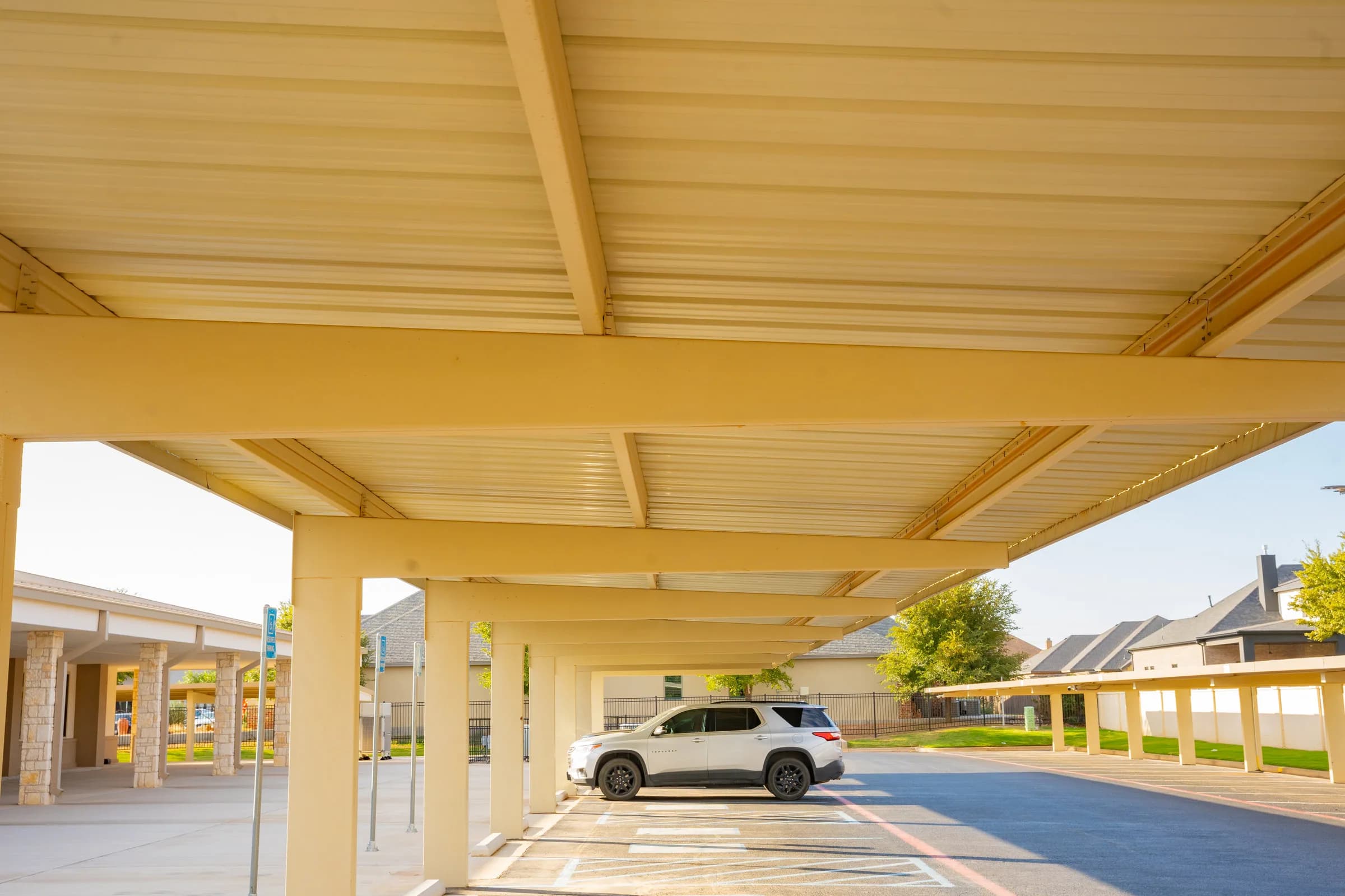
Steel carports blend strength with design flexibility, making them ideal for commercial developments, multifamily housing, and public parking. They protect fleets, resident vehicles, and visitor parking from the elements, and they add a tangible, marketable amenity to any property. Painted and galvanized finishes let owners match brand colors while locking in corrosion resistance.
Solar canopies: shelter that pays you back
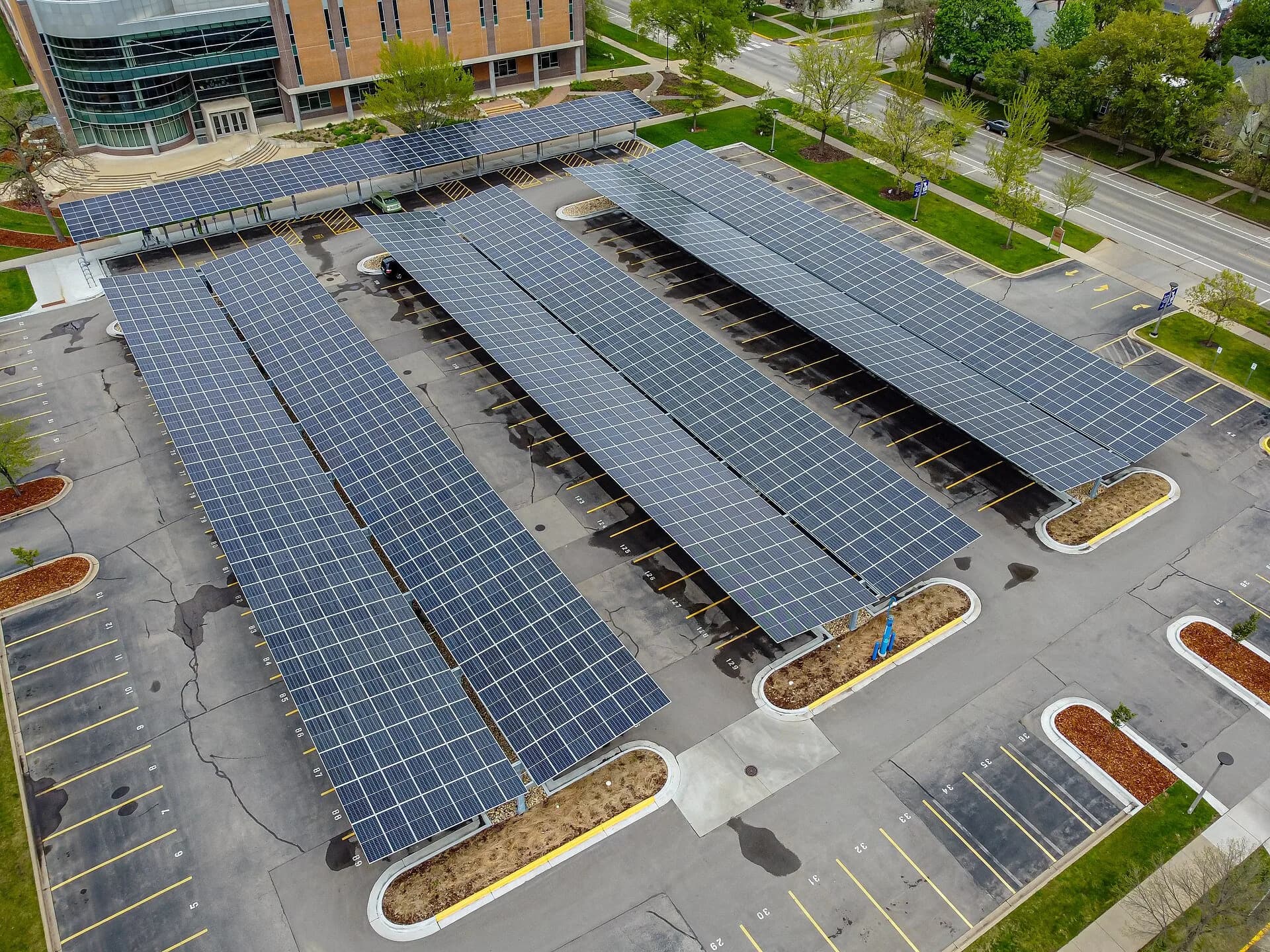
Solar canopies are the fastest-growing category because they do two jobs at once: they shade vehicles or gathering areas while generating renewable power from the same footprint. For energy-conscious companies and municipalities, that means lower utility costs, progress toward sustainability goals, and a structure that earns its keep. Because the supporting frame must carry both environmental and panel loads, solar canopies demand precise structural engineering, which is exactly where an in-house engineering team adds value.
Steel vs. aluminum: which canopy material is right?
Material choice comes down to the job. Steel delivers maximum strength, the widest spans, and the highest load capacity, making it the default for parking, industrial, and solar applications. Aluminum is lighter and naturally corrosion-resistant, which makes it well suited to aluminum walkways and covered pathways where weight and salt or moisture exposure matter more than raw load capacity.
- Choose steel for: covered parking, heavy equipment shelter, solar arrays, and long clear spans
- Choose aluminum for: walkways, breezeways, and lighter-duty pedestrian coverage
- Finish both with: painted finishes or hot-dip galvanizing for 30+ year corrosion protection and color flexibility
How do you choose the right canopy for your property?
Appearance is the last decision, not the first. The structures that perform for decades are spec'd around the real demands of the site. Before fabrication begins, a qualified team should confirm:
- Intended use and the loads it implies, from foot traffic to heavy equipment to solar panel weight
- Required clear span and column placement, which dictate drive lanes and usable space
- Local wind, snow, and seismic codes, which vary widely across the U.S. and drive the engineering
- Foundation and soil conditions at the installation site
- Finish and color requirements for branding, reflectivity, and corrosion resistance
- Project timeline and how installation will affect ongoing operations
This is where an integrated provider matters. When design, engineering, fabrication, and installation live in one company, specifications don't get lost in handoffs between a designer, a separate fab shop, and a third-party crew. That single line of accountability is what keeps projects on code, on budget, and on schedule, whether the structure is going up across town or across the country on a regional or national contract.
The bottom line on metal canopies
Whether you need to protect industrial equipment, upgrade multifamily and commercial parking, add shaded community space, or generate solar power on-site, there is a metal canopy engineered for the job. The difference between a structure that merely looks good and one that performs for 30 years comes down to correct material selection, code-compliant engineering, and quality fabrication. For commercial, industrial, multifamily, and municipal owners nationwide, that combination is what turns overhead coverage into a long-term asset.
Frequently Asked Questions
- What are the main types of metal canopies for commercial properties?
- The five core types are industrial canopies for equipment and inventory protection, steel canopies for covered parking and high loads, shade structures for comfort in public and residential spaces, steel carports for vehicle protection, and solar canopies that generate renewable energy. Each uses similar materials but is engineered for a different operational purpose.
- Should I choose a steel or aluminum canopy?
- Choose steel for maximum strength, the widest clear spans, and high-load uses like covered parking, industrial shelter, and solar arrays. Choose aluminum for lighter-duty applications such as walkways and breezeways, where its lower weight and natural corrosion resistance are advantages. The intended load and span usually make the decision clear.
- How do I spec the right metal canopy for my property?
- Start with the function and loads: what you are covering, the clear span and height needed, and your local wind, snow, and seismic requirements. Those drive material choice, column spacing, and foundation design. Add finish, drainage, and any solar or lighting integration. A fabricator with in-house engineering can translate these inputs into a code-compliant, site-specific design.
- How do metal canopies compare to fabric and wood structures?
- Metal canopies dominate on durability and total cost of ownership. Painted and galvanized steel resist corrosion, UV, fire, and impact for decades, while fabric fades and tears and wood rots and warps, forcing repeated replacement. For permanent commercial and industrial installations, metal delivers the longest service life and the lowest lifetime cost despite a higher upfront price.
- Do you only serve the Lubbock, Texas area?
- No. While Real Steel Canopies is headquartered in Lubbock, TX, the company takes on regional and national contracts across the United States. With in-house design, engineering, and fabrication plus OSHA 30 certified leadership, the team delivers commercial, industrial, multifamily, and municipal canopy projects nationwide.
Ready to protect your property?
Let's design a custom steel canopy solution tailored to your site, budget, and timeline.