Key Takeaways
- Covered parking slows UV, hail, and moisture damage, cutting fleet maintenance and repaint costs across the vehicle's life.
- Protected vehicles hold better paint, interiors, and mechanicals, commanding stronger resale or trade-in value at rotation.
- Shaded, weather-ready vehicles reduce cold-start delays and heat soak, protecting uptime and dispatch schedules.
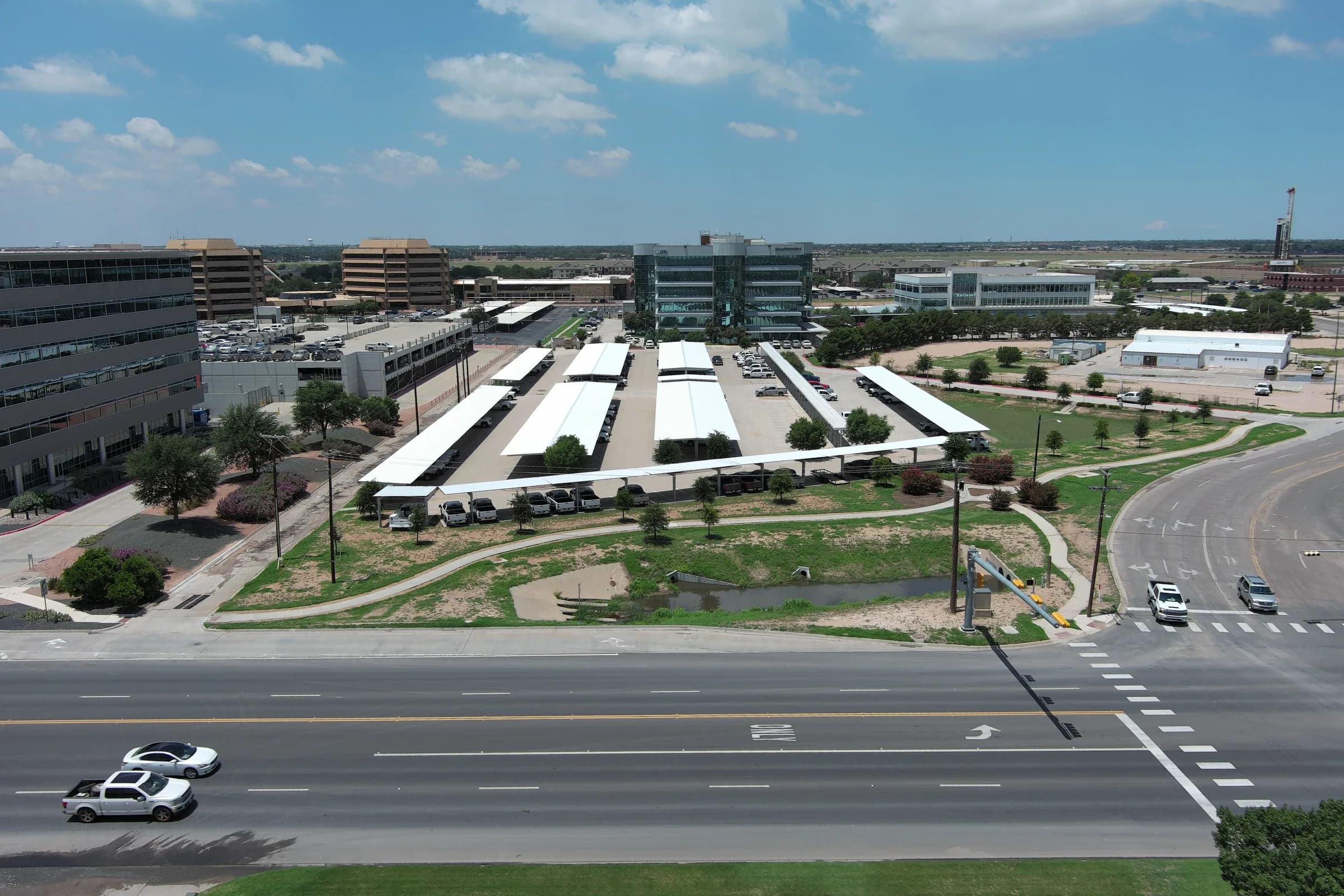
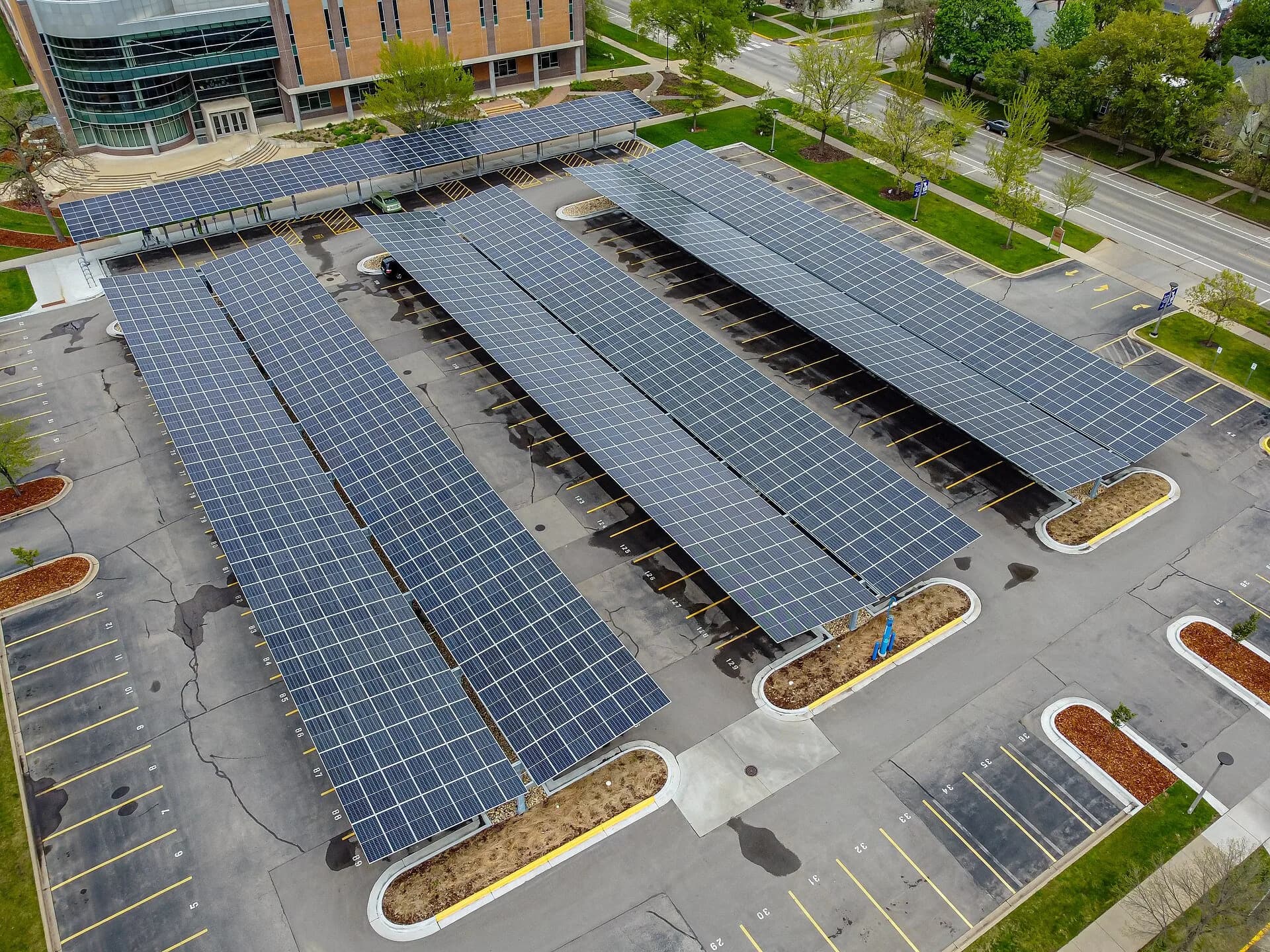
- Engineered steel structures scale from a dozen vans to entire municipal fleets and last decades with painted or galvanized finishes.
- In-house design, engineering, and fabrication enable fast installs nationwide, some completed in as little as three days.
Every vehicle in your fleet is a capital asset on a depreciation schedule, and weather accelerates that curve. Sun bakes paint and dashboards, hail dents sheet metal in minutes, and trapped moisture quietly corrodes brake lines, wiring, and undercarriages. For developers, property managers, GCs, and fleet owners, the question is rarely whether covered parking helps. It is whether the structure pays for itself. With commercial steel carports, the math consistently works, because the savings compound across maintenance, resale, and uptime for the full service life of every vehicle parked underneath.
This is the case for treating steel carports for fleet protection as a financial decision, not a cosmetic one. Below we break down where the dollars actually come from, how the structures hold up, and what to specify so the investment performs for decades.
How do steel carports save businesses money over time?
The return on covered parking comes from three measurable buckets: lower maintenance spend, preserved asset value, and protected operational uptime. None of these are speculative. They are line items most fleet operators already pay every year, just without realizing how much of the cost is weather-driven.
- Maintenance: fewer repaints, less interior UV cracking, slower corrosion, and reduced hail and tree-debris body repair.
- Resale and trade-in: cleaner exterior and interior condition translates directly into higher reconditioning grades and stronger residual value.
- Uptime: vehicles that start, run cool, and stay clear of ice and snow keep routes on schedule and reduce per-vehicle downtime.
A single severe hailstorm can inflict thousands of dollars in damage across a parked fleet in under ten minutes. One avoided event often offsets a meaningful share of the structure's cost, and most fleets in exposed lots face that exposure repeatedly.
Cutting fleet maintenance and repair costs
UV radiation is the slow, expensive killer most operators underestimate. It fades and chalks paint, embrittles dashboards and seals, and degrades exterior plastics and lighting lenses. Heat soak stresses batteries, electronics, and HVAC components. Moisture is the second front: dew, rain, and snowmelt drive rust on body panels, fasteners, exhaust systems, and brake hardware. Covered parking interrupts all of these cycles at once.
The practical effect for a commercial fleet is fewer cosmetic repaints, less frequent interior refurbishment, and corrosion that shows up years later instead of months. Across a fleet of vans, box trucks, service vehicles, or heavy equipment, those deferred and avoided repairs become a recurring annual savings rather than a one-time win.
Do covered vehicles really hold better resale value?
Yes, and the difference is quantifiable at disposition. Auction grading, dealer trade appraisals, and remarketing reconditioning estimates all reward vehicles with intact paint, uncracked interiors, and rust-free undercarriages. A covered fleet rotates out in visibly better condition, which means higher residual value and lower reconditioning deductions on every unit you cycle.
For operations that turn vehicles on a fixed replacement schedule, that residual premium repeats with each cycle. Over a multi-year ownership cadence, protected covered parking effectively raises the salvage value of the entire fleet, turning a parking structure into a recurring contributor to the books.
Protecting fleet uptime and operational efficiency
Downtime is the cost nobody invoices but everybody pays. Vehicles left exposed need windshields scraped, snow cleared, and interiors cooled before they can safely roll. Heat-soaked cabs and frozen equipment delay dispatch, and weather-related wear pulls units out of service for unscheduled repairs. Covered parking compresses all of that lost time.
- Faster morning dispatch with no de-icing or snow removal on covered units.
- Cooler cabs and cargo areas in summer, protecting temperature-sensitive equipment and inventory.
- Fewer weather-driven breakdowns, which means more vehicles available and on route.
- Safer staging areas for drivers and technicians working around the fleet in any season.
Built to last: durable, scalable steel infrastructure
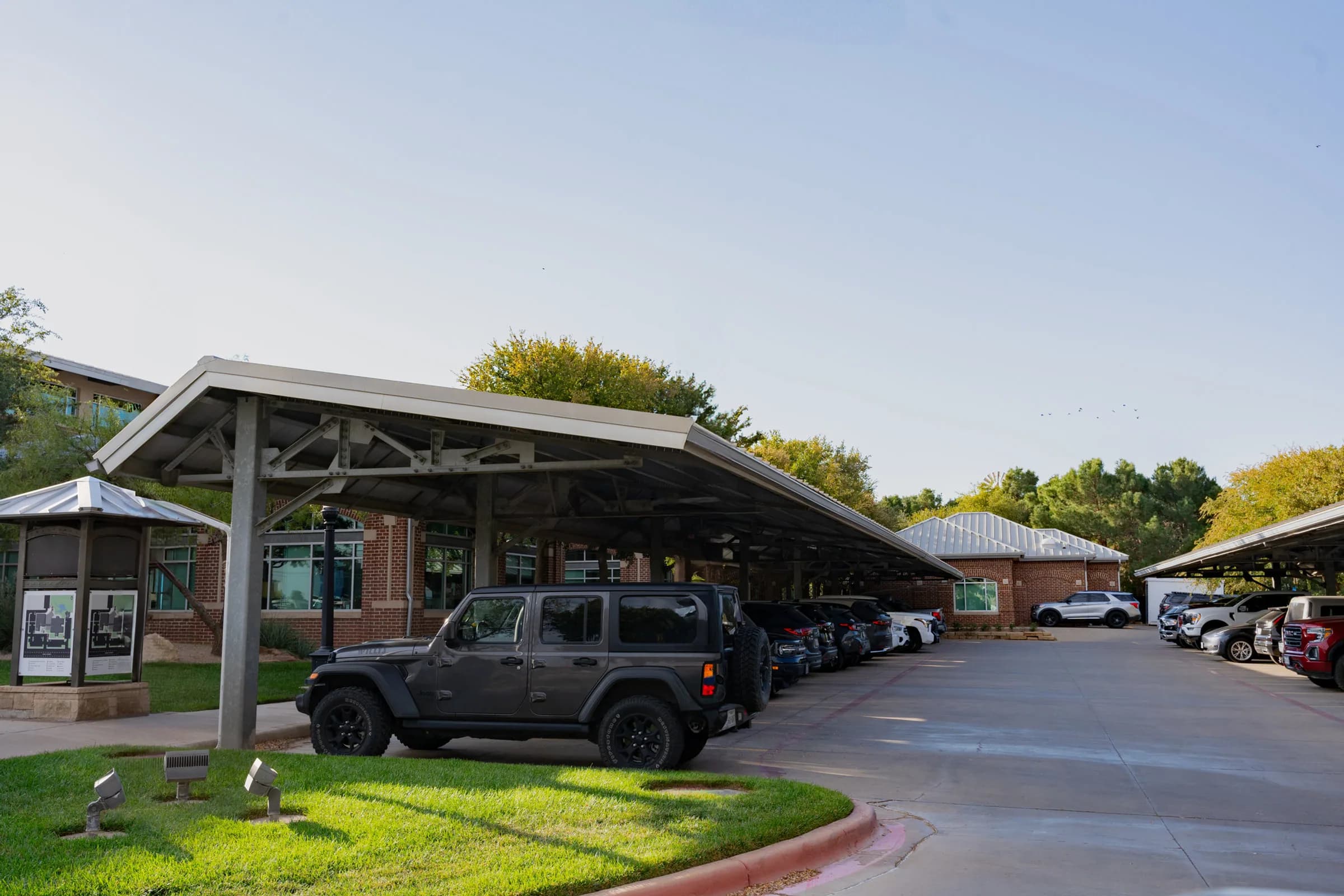
A carport only saves money if it outlives the vehicles it protects, and that is where engineered steel separates from light-duty kits. Properly designed steel carports are engineered to local wind, snow, and seismic loads and built to stand for decades. They scale cleanly from a dozen vans in a service lot to an entire municipal or industrial fleet, and they can be laid out to fit existing parking geometry, drive aisles, and code setbacks.
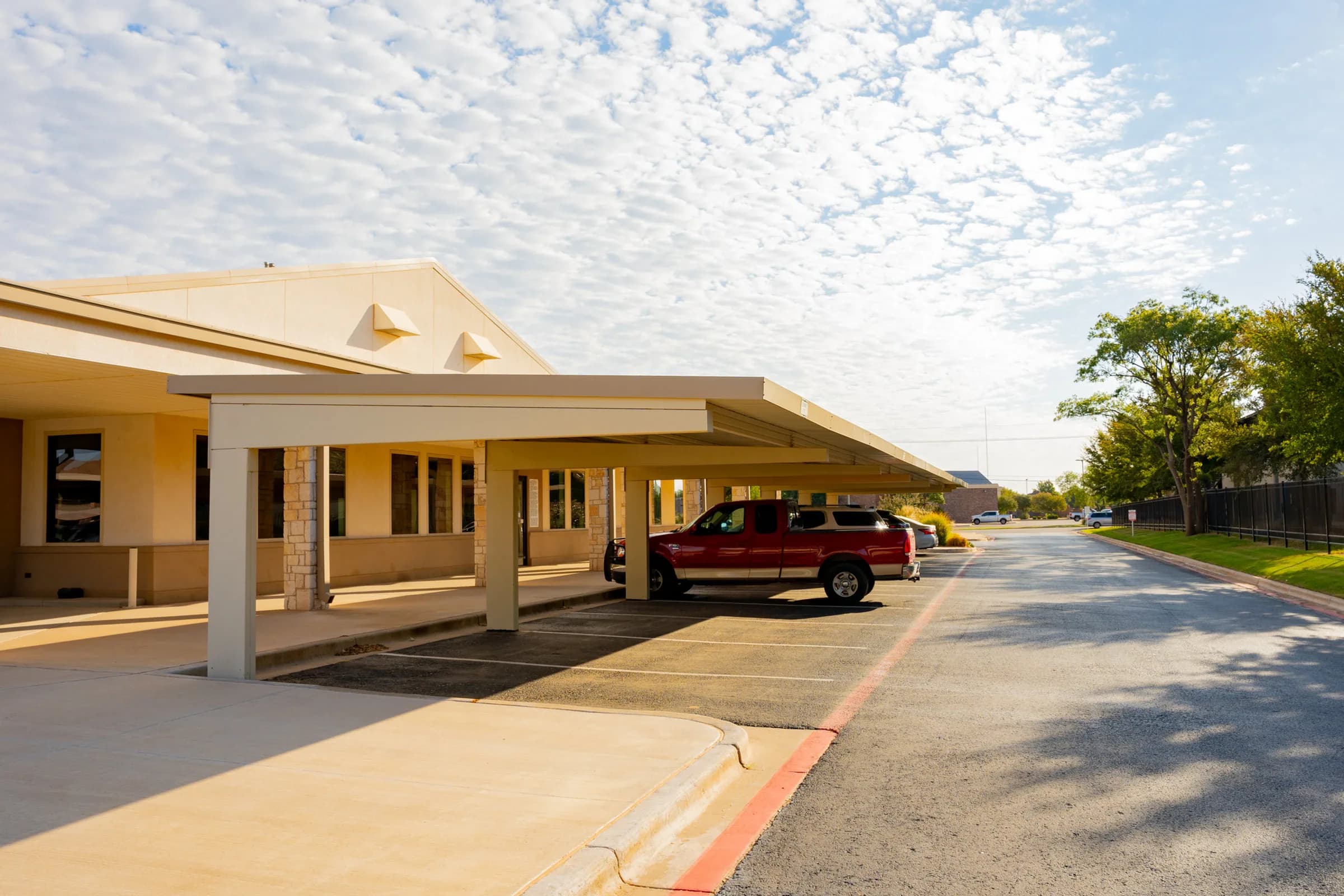
Finish matters as much as frame. Painted and galvanized finishes resist corrosion and keep the structure low-maintenance and professional-looking for its full service life, so the asset protecting your fleet does not itself become a maintenance line item. At Real Steel Canopies, we design, engineer, fabricate, and install these structures in-house, which keeps quality control and lead times under one roof rather than scattered across subcontractors.
Why in-house fabrication and fast installation matter
When the company that engineers your structure also fabricates and installs it, you remove the handoffs where schedules slip and accountability blurs. With 20-plus years of experience and OSHA 30 certified leadership, we manage covered parking and steel carport projects from drawing to finished install on regional and national contracts across the United States. We have completed large-scale installs in as little as three days, including work for general contractors such as Austin Commercial, minimizing disruption to active lots and operating fleets.
For developers and GCs, that integrated model means predictable timelines and a single point of responsibility. For fleet and facility owners, it means the structure protecting your vehicles is engineered for your climate, your lot, and your codes, not pulled from a one-size catalog.
The bottom line on steel carport ROI
Steel carports are not overhead shelters; they are revenue-protecting infrastructure. By cutting maintenance spend, defending resale value, and safeguarding uptime, covered parking quietly pays for itself and then keeps paying. For any operation running commercial vehicles in an exposed lot, the more relevant question is how much an unprotected fleet is already costing every year, weather event after weather event.
Frequently Asked Questions
- How quickly does a steel carport pay for itself?
- Payback depends on fleet size, climate, and vehicle value, but the savings stack quickly. Avoided hail or storm repair, reduced repaints, slower corrosion, higher resale grades, and less weather downtime all accrue annually. In hail- or sun-exposed regions, a single avoided storm can offset a large share of the structure's cost, with savings continuing every year afterward.
- What size fleet justifies covered parking?
- There is no minimum. Engineered steel carports scale from a handful of service vans to entire municipal, industrial, or multifamily fleets. Because structures are sized to your lot and vehicle count, even smaller operations protecting high-value or specialized vehicles see strong returns through reduced maintenance and preserved resale value.
- How do covered carports reduce fleet insurance claims and premiums?
- Sheltering vehicles from hail, wind-driven debris, and sun dramatically cuts the comprehensive claims that drive fleet premiums up. Fewer hail dents and weather repairs mean a cleaner loss history, which insurers reward at renewal. Some carriers also recognize covered storage as a risk-reduction measure, so the structure can lower both claim frequency and ongoing insurance cost.
- How does covered parking protect fleet resale value and uptime?
- Vehicles kept out of sun and hail keep their paint, interiors, and bodywork in better condition, earning higher resale and trade-in grades. Protection also prevents weather-related damage that sidelines vehicles, so more units stay in service. Less downtime and stronger residual values both flow straight to the fleet's bottom line over the ownership cycle.
- Can carports be customized to our existing lot and brand?
- Absolutely. Structures are laid out to fit your parking geometry, drive aisles, and local building codes, and finishes can match brand colors. Because we control design, engineering, and fabrication in-house, customization for layout, height clearance, and aesthetics is built into the process rather than treated as an add-on.
Ready to protect your property?
Let's design a custom steel canopy solution tailored to your site, budget, and timeline.